


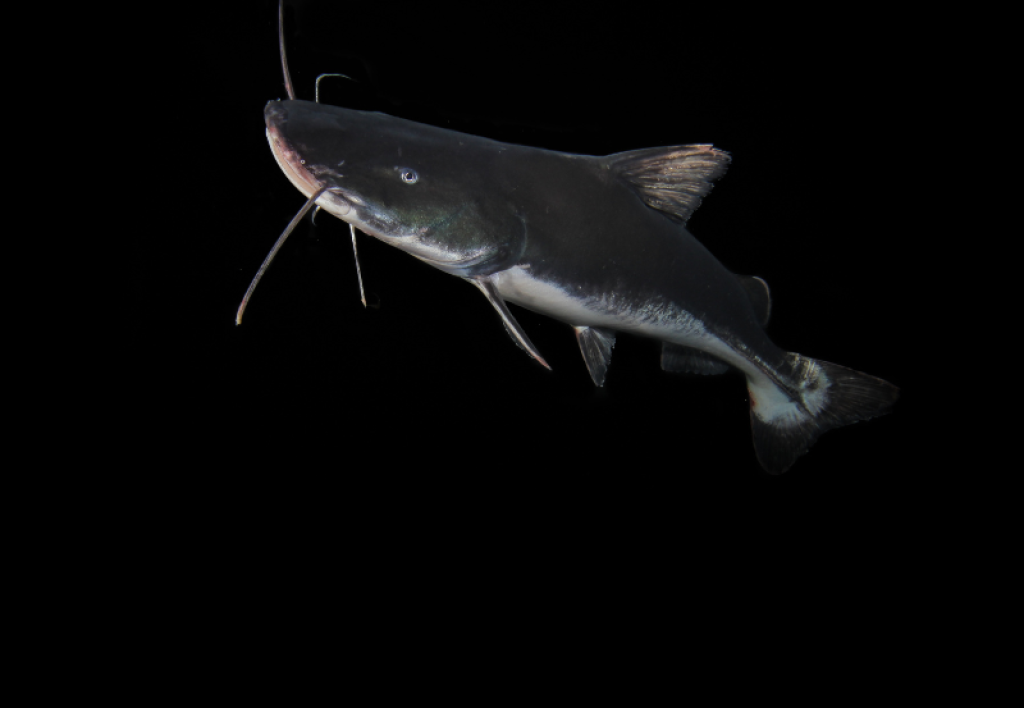
The Global Assessment of Freshwater Migratory Fish, launched this Tuesday (March 24) at a side event of the 15th Meeting of the Conference of the Parties to the Convention on the Conservation of Migratory Species of Wild Animals (CMS COP), indicates that 97% of freshwater fish listed by the CMS are threatened with extinction. Conducted jointly by the CMS, WWF, and the University of Nevada (USA), the study included the collaboration of the Ministry of Environment and Climate Change (MMA) and is the most comprehensive assessment of freshwater migratory fish to date.
See the Global Assessment here.
“Freshwater migratory fish are not only ecological marvels but also essential for food security, local economies, and the cultural heritage of many populations around the world,” said CMS Executive Secretary Amy Fraenkel.
These species are among the most threatened vertebrates, affected by factors such as altered water flows, habitat degradation, overexploitation, and pollution, which have already led to an estimated population decline of around 90% among CMS-listed species since the 1970s.
“These results are the product of a global effort. We have every reason to be deeply concerned. Our fish species, which are the foundation of so many communities, essential for food security and for the functioning of our economic systems, and which possess unique characteristics, are sending us clearer than ever signals about their level of threat, vulnerability, and the urgency of our attention,” said Rita Mesquita, National Secretary for Biodiversity, Forests, and Animal Rights at the MMA.
Currently, only 24 species are listed under CMS, but the report identifies a total of 349 that meet the convention’s criteria. This means that 325 freshwater migratory fish species not yet formally listed in the CMS appendices may be under some level of conservation threat or risk of extinction. Asia has the highest number of threatened migratory fish (205), followed by South America (55), Europe (50), Africa (42), North America (32), and Oceania (6).
The study also highlights river basins where international cooperation could make a significant difference: the Amazon, La Plata–Paraguay–Paraná, Danube, Mekong, Nile, and Ganges–Brahmaputra.
“It is encouraging to see alignment between the CMS agenda and freshwater challenges. This convergence shows how global initiatives can reinforce national priorities. Brazil’s environmental leadership is strengthened both in the conservation of migratory fish and in maintaining habitat connectivity. By integrating this agenda, the country reaffirms its commitment to the sustainability of essential ecological processes,” said João Paulo Capobianco, President of CMS COP15 and Executive Secretary of the MMA.
Amazon Basin
In the Amazon Basin alone, 21 migratory fish species in unfavorable conservation status have been confirmed, according to a case study included in the Global Assessment of Freshwater Migratory Fish.
The group of candidate species includes long-distance pimelodid catfish (such as large catfish of the genera Brachyplatystoma and Pseudoplatystoma), migratory characiforms (including Brycon, Leporinus, Prochilodus, and Semaprochilodus), and widely exploited serrasalmids.
The Amazon Basin stands out for its long-distance migratory fish. The gilded catfish or dourada (Brachyplatystoma rousseauxii) is recognized for undertaking the longest freshwater migration cycle—over 11,000 kilometers—from the Andes to the Atlantic Ocean and back.
According to the study, these large migratory fish account for 93% of fishery catches and generate approximately USD 436 million (around BRL 2.28 billion) annually.
Regional Action Plan
The Regional Action Plan for Amazonian Migratory Catfish is under consideration at CMS COP15. The document was presented by the Government of Brazil and developed with the participation of authorities from Bolivia, Colombia, Ecuador, Peru, and Venezuela.
Large Amazonian migratory catfish, such as the dourada and piramutaba (Brachyplatystoma vaillantii), were included in CMS Appendix II during COP14, recognizing the need for international cooperation for their conservation.
The plan’s strategic objectives include conserving critical habitats and river connectivity, strengthening scientific and local knowledge, promoting sustainable value chains, aligning policies and regulatory frameworks, and supporting international cooperation.
“Brazil has made significant efforts to establish recovery action plans for threatened species. We have worked on revising and updating lists of endangered species and invasive exotic species. We have placed on the agenda the clear need to discuss these spaces,” explained Rita Mesquita.
Within the scope of COP15, Brazil has proposed the inclusion of the surubim (Pseudoplatystoma corruscans) in CMS Appendix II.
Special Advisory for Social Communication of the MMA
[email protected]
+55 (61) 2028-1227/1051
Visit MMA’s Flickr