


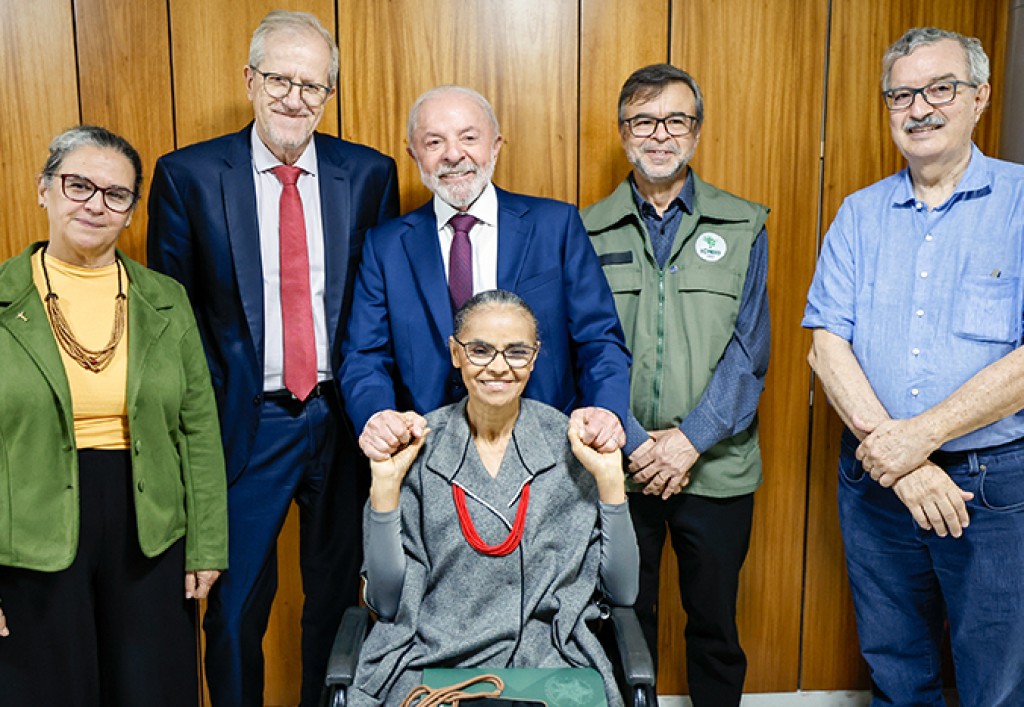
The Government of Brazil announces, on this Friday, 23th January, the appointment of the Executive Secretary of the Ministry of the Environment and Climate Change of Brazil, João Paulo Capobianco, as President of the 15th Meeting of the Conference of the Parties to the Convention on the Conservation of Migratory Species of Wild Animals (CMS COP15).
The next session of the Conference will be held in Campo Grande, Mato Grosso do Sul, from 23 to 29 March 2026. The event will bring together governments, scientists, indigenous peoples, and traditional communities, as well as civil society from around the world to address the urgent conservation challenges which affect thousands of wild animal species that migrate across terrestrial, marine, and aerial borders. This will be the first time Brazil hosts the Conference – the last COP held in Latin America took place in Ecuador in 2014.
As President of COP15, Capobianco will be responsible for facilitating negotiations among countries to advance ecological connectivity and ecosystem conservation. In this context, the choice of Mato Grosso do Sul, home to three-quarters of the Pantanal biome, is considered strategic, as the region is a key corridor for migratory routes across the Americas.
According to João Paulo Capobianco, “migratory wild animal species play a fundamental role in biodiversity conservation, generating environmental and economic benefits, including the strengthening of sustainable tourism and the services sector”. “Hosting COP15 of the Convention on Migratory Species represents a major responsibility for Brazil and reinforces the country’s leadership in the global environmental agenda, with positive impacts across all Brazilian biomes and the coastal and marine system.”, complemented.
“I thank President Lula for endorsing the MMA’s nomination of João Paulo Capobianco as President of COP15,” said the Minister of the Environment and Climate Change of Brazil, Marina Silva. “Capobianco is widely recognized for his long-standing commitment to environmental conservation and brings solid experience in public administration. He has served as President of ICMBio and is now, for the second time, Executive Secretary of the MMA, where he also held the position of National Secretary for Biodiversity and Forests. In this capacity, he contributed to the coordination of the eighth Conference of the Parties to the Convention on Biological Diversity, presided over by Brazil, held in Curitiba in 2006.”
A Party to the CMS since 2015, Brazil is the most biodiverse country in the world. Numerous migratory species depend on Brazilian habitats for their survival, including for breeding, feeding, and stopover sites along their migratory routes. The country’s six biomes host extraordinary biodiversity, including migratory species such as the jaguar, the Mexican free-tailed bat, and the peregrine falcon.
Brazil is also home to a remarkable diversity of migratory species, including sharks, rays, freshwater migratory fish, turtles, numerous bird families, bats, as well as small cetaceans, whales, and other marine mammals.
Until the opening of COP15, the current Presidency of the Conference remains with Uzbekistan, which hosted COP14 in February 2024. As President-designate, however, Brazil will already lead efforts to ensure successful negotiations, fostering dialogue among countries and other stakeholders.
Biography
A biologist and environmentalist, João Paulo Capobianco holds a specialization in Environmental Education from the University of Brasília (UnB) and a PhD in Sciences from the University of São Paulo (USP).
He served as National Secretary for Biodiversity and Forests and as Executive Secretary of the Ministry of the Environment from 2003 to 2008, and as President of the Chico Mendes Institute for Biodiversity Conservation (ICMBio). During this period, he also acted, among other roles, as Coordinator of the Interministerial Working Group for the Prevention and Control of Deforestation in the Amazon, Chair of the Genetic Heritage Management Council and of the Brazilian Forests Commission, and Vice-Chair of the National Environment Council.
Between 2008 and 2009, he was a visiting professor at Columbia University, where he joined the Center on Global Energy Policy (CEES), and also worked as an associate researcher at the Amazon Environmental Research Institute (IPAM).
He is the author of several publications on environmental issues, including Biodiversity in the Brazilian Amazon, which received one of the most prestigious awards for literature in Brazil, the Jabuti Prize for Non-Fiction in 2003, and Amazon – A Decade of Hope, published in 2021.
The Convention
The Convention on the Conservation of Migratory Species of Wild Animals (CMS) is a United Nations environmental treaty that provides a global platform for the conservation of migratory species, their habitats, and migration routes throughout their range.
It brings together governments, Indigenous Peoples and traditional communities, civil society, and wildlife experts to address the conservation needs of migratory species and their habitats worldwide.
Since the Convention entered into force in 1979, 133 countries from Africa, Central and South America, Asia, Europe, and Oceania have become Parties. Find out more.
See the Portuguese version here.